Outdoor Patio Kitchen Contractors Near Me: Expert Guidance & Best Practices
Outdoor patio kitchen contractors near me offer more than just installation; they bring expertise in design, local building codes, and durable materials suited to your environment. Whether you’re looking to create a sleek grill island, a full cooking suite, or a cozy bar area, a seasoned contractor helps avoid costly mistakes and ensures a long-lasting outdoor kitchen.
The value isn’t just aesthetic. Professional contractors integrate utilities, gas, water, and electricity safely. They design for proper drainage, weather-resistant materials, and ergonomic layout. That way, your outdoor kitchen isn’t just built; it performs flawlessly for years.
Key Considerations When Searching Locally
First, verify licensing and insurance to ensure quality workmanship and liability protection. Prioritize contractors with a strong local track record and positive feedback about patios and outdoor kitchens. Check that they understand your microclimate, whether it’s intense sun, heavy rain, or high humidity, and select materials accordingly.
Evaluate their portfolio. Look for evidence of sturdy foundations, weatherproof cabinetry, and seamless integration with existing landscaping or patios. Ask about warranties and follow-up service; reliable contractors offer comprehensive support well after project completion.
Planning Your Outdoor Patio Kitchen
Structuring Around Space & Utility Needs
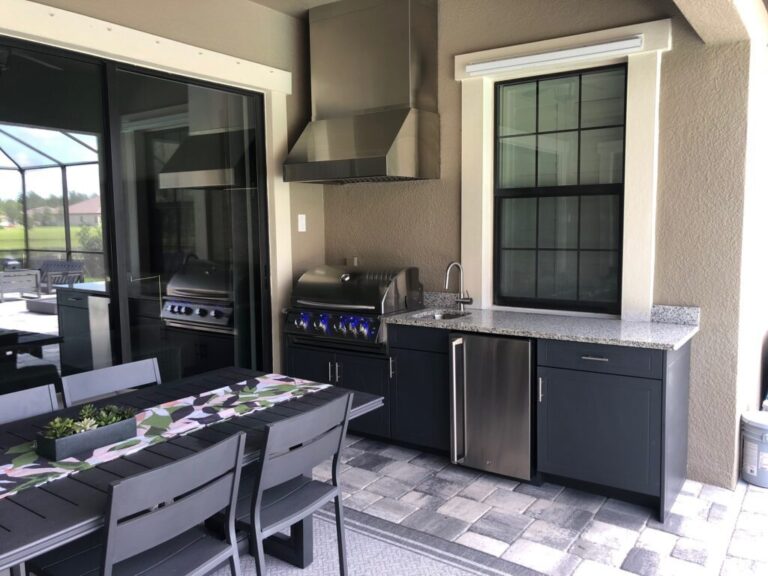
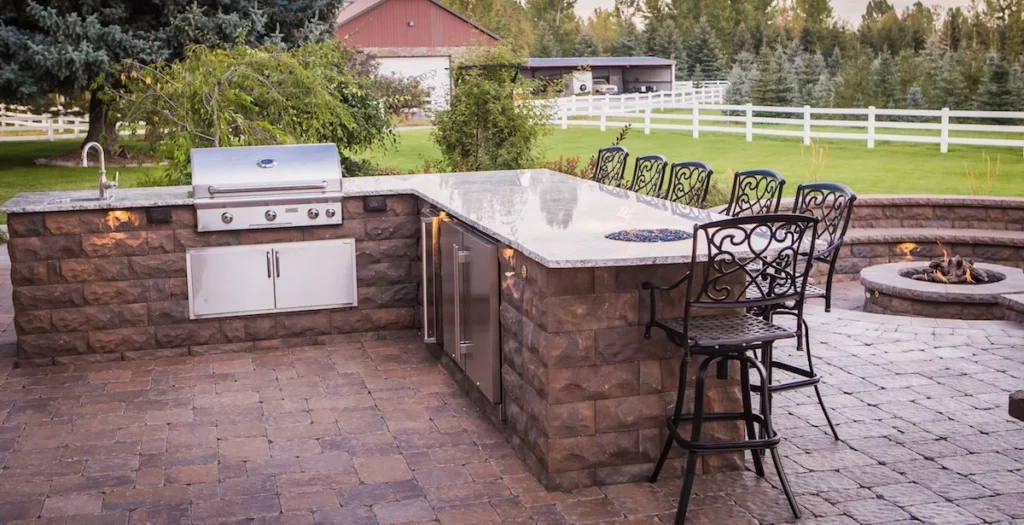
Begin with a clear vision: what size, shape, and function you want. Standard layouts include L-shapes for open areas, island counters for cooking and socializing, or linear galley setups. Contractors help you make the most of your patio’s slope, sun exposure, and existing infrastructure.
Utilities must be thought through early. Planning gas, water, and power lines alongside drainage avoids disruptive excavation later. A professional contractor ensures each utility meets local building codes and is placed for optimal efficiency, keeping lines away from foot traffic zones and close to desired appliances.
Selecting Durable Materials
Opt for stainless steel or marine-grade aluminum for cabinetry, which resists rust and fading. Countertops of granite, concrete, or porcelain withstand heat and weather extremes. Flooring should complement patio surface,s natural stone pavers, concrete, or composite decking, all with non-slip finishes for safety.
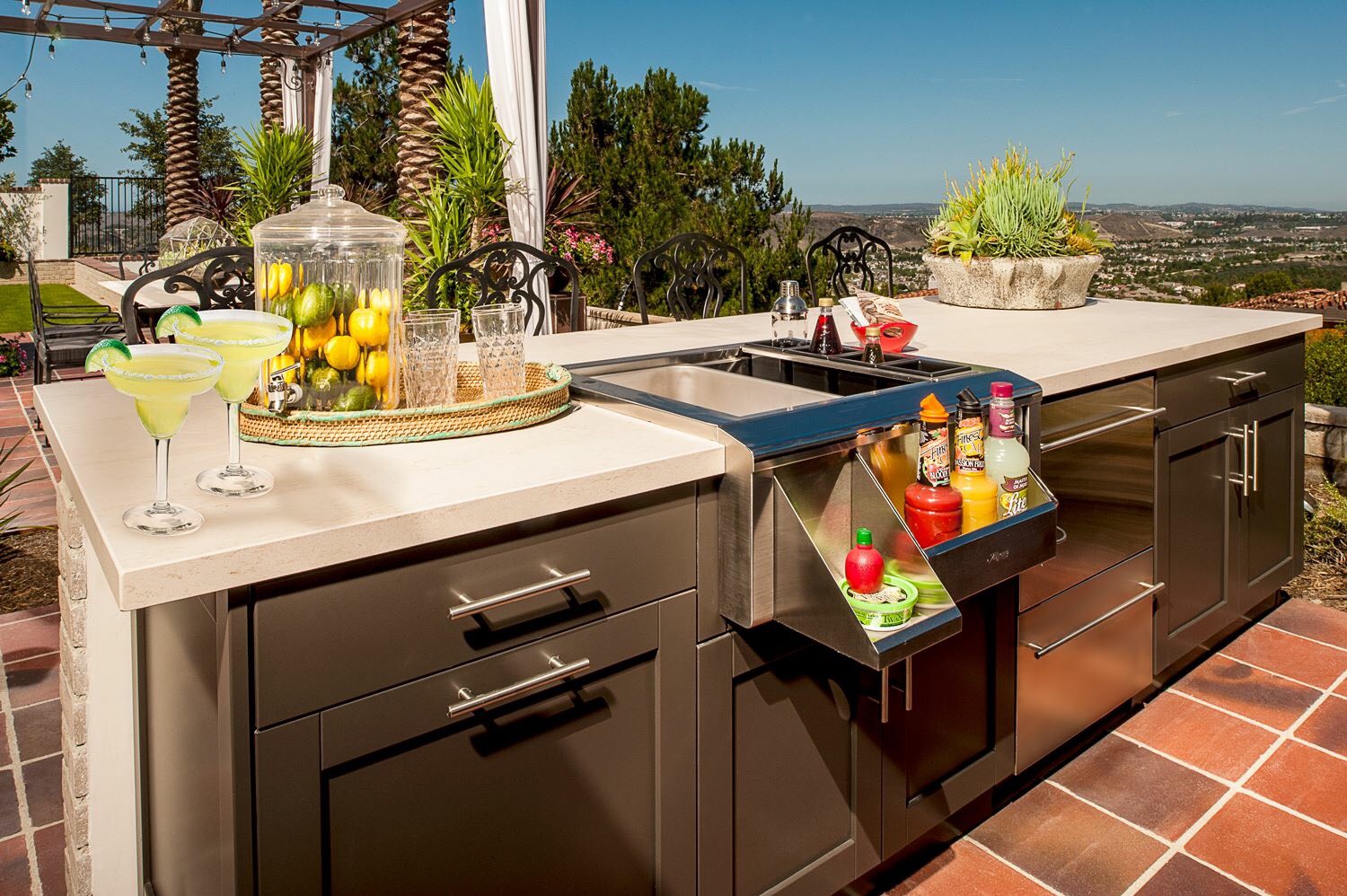
Technology like sealed cabinetry and concealed drainage improves longevity. Under-counter refrigeration, integrated lighting, and smart sensors allow you to monitor temperature and power remotely. This future-proofs your space and amps up convenience.
Real‑World Example Projects

1. Built‑In Gas Grill with Bar Seating
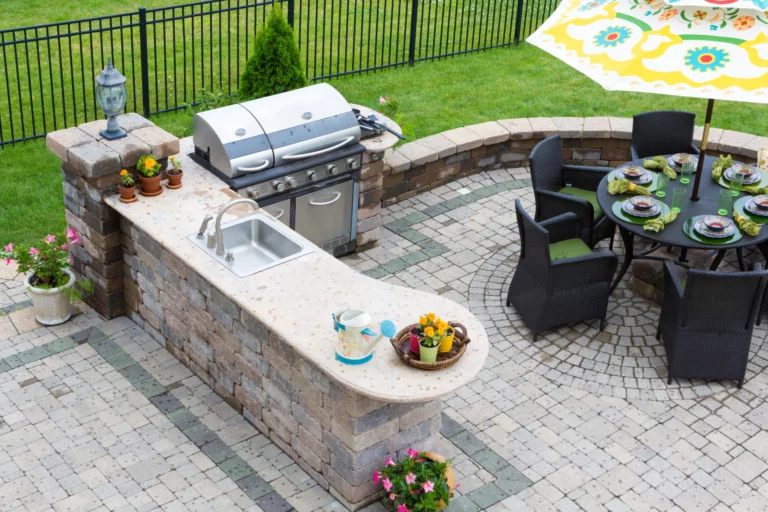
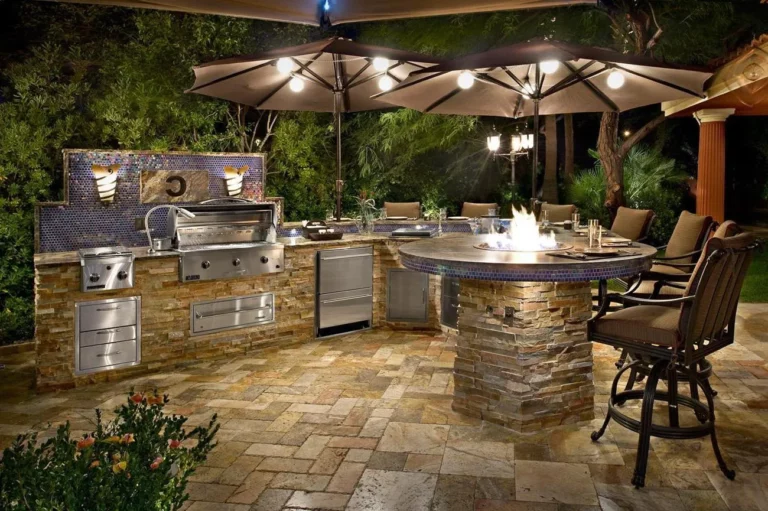
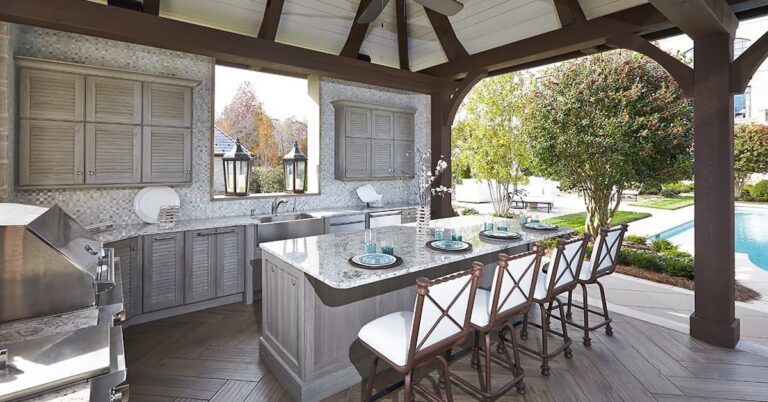
A suburban backyard featured a contractor-installed L-shaped kitchen. It included a built-in stainless gas grill, prep sink, and bar seating for six. Carefully planned drainage kept wash water off the patio. Cabinetry included sealed doors and soft-close fridges designed for outdoor use. Lighting under the counter added evening ambiance without glare.
This setup is relevant because it demonstrates how contractors combine cooking and entertaining in one seamless outdoor area.
2. Pizza Oven & Prep Island Combo
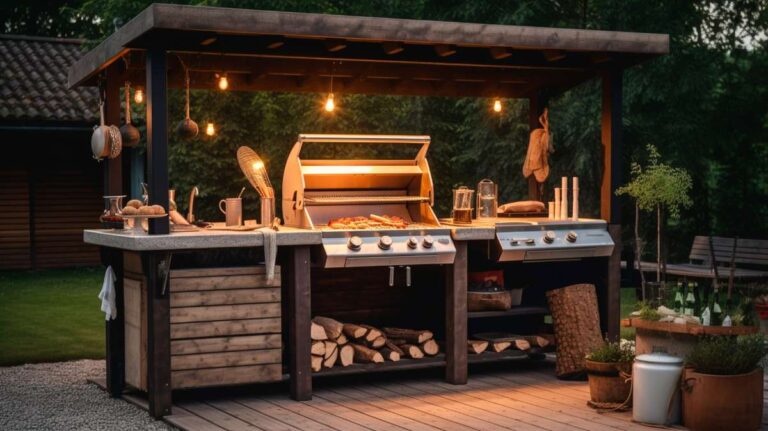
In a coastal home, the contractor designed a prep island around a wood-fired pizza oven. The oven’s high-heat-resistant stone base was integrated with granite countertops and durable cabinetry. The contractor added a dedicated ventilation overhang and prep surfaces, preventing smoke drift. This project highlights how custom features enrich the space and improve functionality and enjoyment.
3. Compact Patio Bench with Hidden Storage
For a small urban patio, the contractor built a compact countertop and bench combo. Beneath the seating, weatherproof storage for cushions and tools keeps the space tidy. The countertop included a portable grill and retractable cover, so the kitchen can be tucked away when not in use. This example shows how professional design maximizes limited space without sacrificing utility.
Technology Advantages in Outdoor Kitchens
Smart Appliance Integration
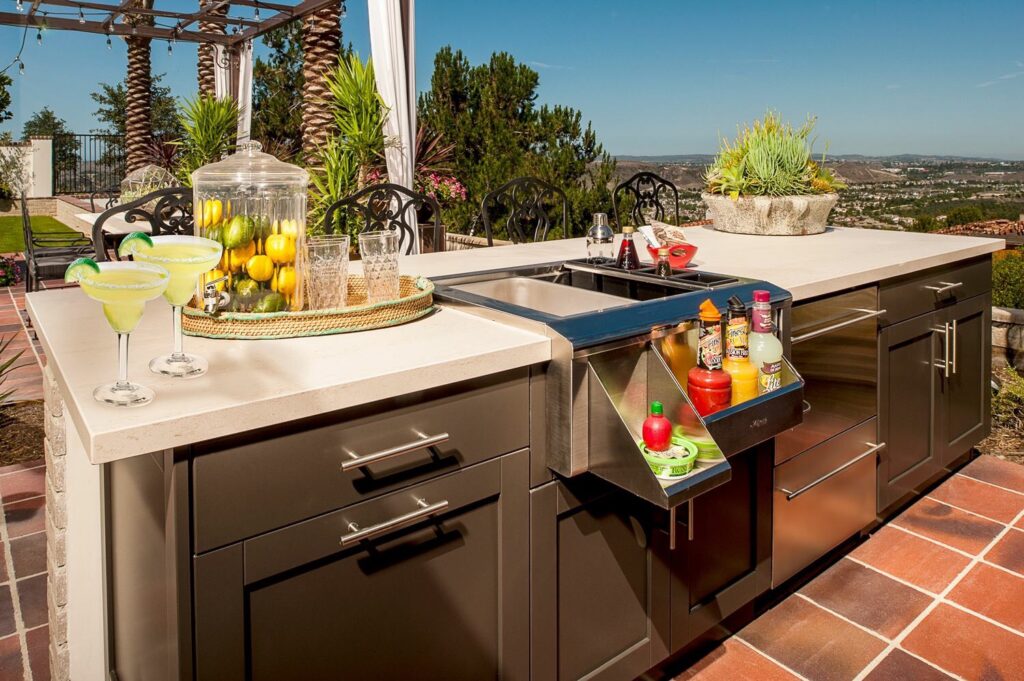
Modern contractors install smart-powered under-counter refrigeration, integrated motorized lighting, and remote-monitored propane levels. You get real-time alerts if gas is low or fridge temperature fluctuates, minimizing food spoilage and enhancing convenience.
Durable Material Innovations
Advances like composite decking, coated stainless steel, ultra-compacted porcelain tile, and surface-sealed concrete provide patio kitchens with weather resistance and low maintenance. Contractors ensure materials complement local weather, such as UV-resistant surfaces in high-sun zones or anti-slip finishes for rainy climates.
Modular & Pre‑Fabricated Options
Some contractors use modular cabinetry systems. Off-site fabrication means high precision, factory-quality seals, and quick on-site assembly. These systems allow flexibility, adding components later like a sink, fridge, or pizza oven, and reduce construction time while increasing durability.
Practical Use Cases and Problem‑Solving

Scenario: Family BBQs Without Indoor Crowding Problem: The Tindoorr kitchen fills up during gatherings.
Solution: A patio kitchen with a grill island and prep sink, installed by a contractor, provided efficient flow—food being prepared and served outdoors. Guests mingled outside, without clogging indoor cooking spaces.
Scenario: Small Patio Without Clutter
Problem: Limited patio space is becoming disorganized.
Solution: A compact contractor-designed unit included bench seating, storage lockers, and a slide-out grill—all foldable. The integrated design keeps everything neat and functional while maximizing open space.
Scenario: Coastal Corrosion
Problem: Salty air quickly damages appliances and hardware.
Solution: Contractor-specified marine-grade materials and sealed cabinetry ensured resistance against corrosion. Covered outlets and stainless bolts further prevented rust, extending the kitchen’s lifespan.
Benefits of Professional Installation
-
Longevity & Durability: Proper installation of waterproof seals and robust foundations increases lifespan, reducing long‑term repair costs.
-
Compliance & Safety: Licensed contractors adhere to local codes, correctly installing gas and electrical lines to avoid hazards.
-
Enhanced Resale Value: A professionally installed outdoor kitchen boosts home appeal. Quality materials and contractor-backed warranties add market value.
-
Seamless Experience: Contractors manage all aspects—design, materials, builds, permits, and timelines—making the process stress-free for homeowners.
Frequently Asked Questions
Q: How long does installation typically take?
A: A simple grill island can take 2–4 weeks; a full kitchen with plumbing and utilities might take 6–12 weeks, including planning, inspection, and weather delays.
Q: Do outdoor kitchens need permits?
A: Yes. Permits are usually required for gas, electrical, plumbing, and structural modifications. Local codes vary—licensed contractors ensure all permits are obtained before work starts.
Q: How can I maintain an outdoor kitchen?
A: Basic upkeep includes cleaning countertops, flushing gas lines before winter, applying sealants annually, and checking refrigeration with HVAC-style maintenance every few years. Contractors often offer seasonal maintenance as part of warranty services.